 EN
EN
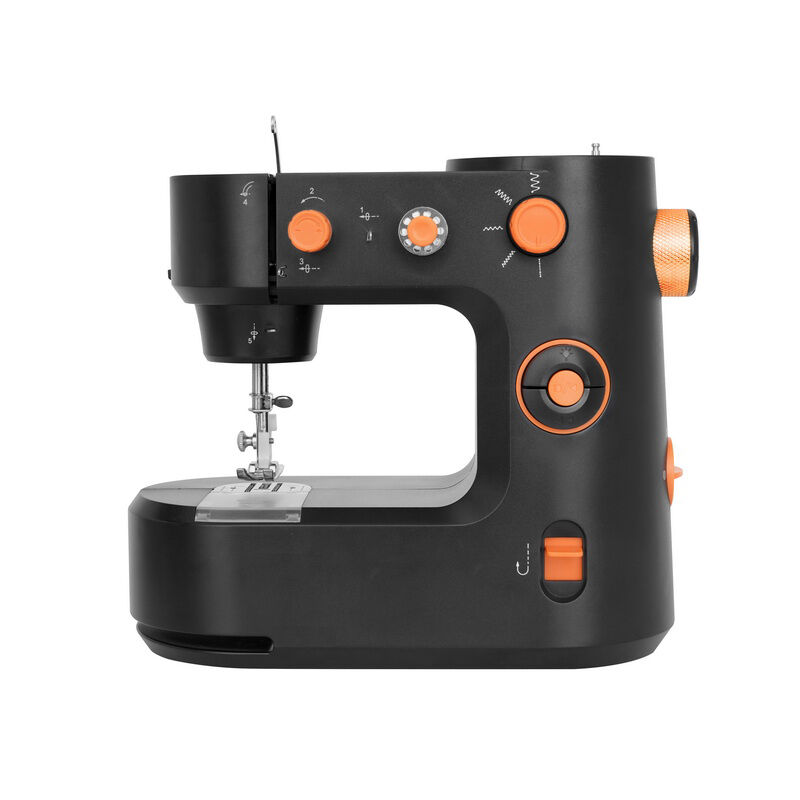
Assess Proven Expertise and Compliance of the Electric Sewing Machine OEM Manufacturer
Evaluate industry tenure, ISO 9001/CE certifications, and independent audit reports
Prioritize manufacturers with 10+ years of specialized experience—longevity signals mature production systems and proven problem-solving. Require current ISO 9001 certification (validating robust quality management) and CE marking (confirming compliance with EU safety, health, and environmental standards). Supplement these with recent third-party audit reports covering factory working conditions, environmental practices, material traceability, and waste disposal protocols. Facilities subject to annual independent audits reduced defect rates by 37% compared to self-certified peers, per a 2023 manufacturing benchmark study. For critical subsystems—including motors and controllers—demand test logs verifying 500+ hours of operational reliability under sustained load.
Review OEM client portfolios, regional market presence, and verified customer testimonials
Analyze client portfolios for recognizable brands in adjacent high-compliance sectors (e.g., automotive upholstery or medical textile producers), which reflects capacity to meet rigorous quality and regulatory thresholds. Cross-check regional market penetration—especially in your target geographies—to confirm familiarity with local requirements like voltage compatibility, plug standards, and safety certifications. Manufacturers with service hubs across three continents resolve supply chain disruptions 50% faster, according to logistics performance data. Prioritize verified testimonials from trusted platforms like Trustpilot or industry-specific forums, focusing on consistent praise for post-sales responsiveness, design collaboration flexibility, and on-time delivery during peak seasons. Avoid anonymous reviews; instead, seek video testimonials showing operational equipment with timestamps for authenticity.
Verify End-to-End Support Capabilities for Electric Sewing Machine OEM Partnerships
Compare warranty terms (2–5 years), parts availability SLAs, and labor/service coverage scope
A reliable OEM offers warranties spanning two to five years, explicitly covering defects in materials and workmanship—including motors, controllers, and software updates. Within that term, assess the spare parts service-level agreement (SLA): top-tier providers guarantee delivery of critical components within 48 hours to minimize downtime. Labor and service coverage must include on-site repair for industrial units—not just depot returns. The strongest partners offer tiered service packages: a base warranty for standard coverage and a premium option featuring prioritized dispatch, extended labor hours, and expedited diagnostics.
Map service infrastructure: authorized dealer network density, multilingual technical support, and remote diagnostics readiness
Look beyond the warranty document to evaluate real-world service readiness. A dense, well-distributed network of authorized dealers ensures local access to replacement parts—cutting shipping delays and supporting rapid resolution. Multilingual technical support is essential for global operations; verify that hotline engineers speak your target languages and operate across relevant time zones. Equally vital is remote diagnostic capability: leading OEMs embed firmware-level monitoring that allows technicians to log into the machine’s controller remotely, identify root causes, and prepare targeted interventions before dispatch. This hybrid model—combining physical service reach with digital intelligence—directly improves uptime and lowers total cost of ownership.
Audit Documentation, Packaging, and Regulatory Readiness for Global Electric Sewing Machine OEM Fulfillment
Validate completeness of technical documentation (multilingual manuals, firmware logs, EMC/UL compliance certificates)
Complete, multilingual technical documentation is foundational for global deployment. Operation manuals in key markets prevent misuse and reduce training overhead. Firmware version logs ensure full traceability during updates and field troubleshooting. Validated EMC (Electromagnetic Compatibility) and UL safety certificates confirm adherence to destination-market regulations. A compliant Technical Construction File (TCF) must include accredited test reports, detailed product specifications, and signed Declarations of Conformity. Missing or incomplete documentation risks customs holds or non-compliance penalties exceeding $50,000 per shipment, per the Global Trade Review (2023).
Inspect export-grade packaging, REACH/RoHS-compliant labeling, and logistics traceability systems
Export packaging must withstand multi-modal transit—including humidity, vibration, and stacking—without compromising machine integrity. REACH and RoHS-compliant labeling confirms adherence to EU hazardous substance restrictions and supports seamless customs clearance. Logistics traceability—enabled via RFID tags or integrated GPS-enabled telematics—provides real-time visibility across the supply chain. Note that CE certification itself requires documented risk assessments (mechanical/electrical hazards), certified EMC/safety testing, and a complete technical documentation package. Proper labeling alone reduces customs clearance time by 40%, according to the Trade Logistics Journal (2024).
Confirm Scalable OEM/ODM Customization Capabilities for Industrial Electric Sewing Machines
Assess motor integration options (servo vs. clutch), IoT-enabled telemetry, and software-defined stitch logic
Motor selection is a strategic differentiator. Servo motors deliver precise speed control, energy efficiency, and low noise—ideal for variable-load industrial applications. Clutch motors remain viable for high-speed, constant-duty tasks where upfront cost is prioritized over long-term efficiency. Beyond hardware, confirm IoT telemetry capabilities: real-time monitoring of stitch count, thermal performance, and predictive maintenance alerts significantly reduce unplanned downtime. Software-defined stitch logic—enabling digital stitch pattern changes without mechanical reconfiguration—enhances line flexibility and accelerates changeovers between product variants.
Evaluate trade-offs: high-volume scalability versus firmware access, API openness, and co-development flexibility
Scalability and customization often involve deliberate trade-offs. High-volume OEM partners typically optimize for speed and cost, offering fixed software stacks with limited firmware modification rights and closed APIs. In contrast, manufacturers committed to co-development provide open APIs, full firmware access, and joint R&D frameworks—empowering clients to embed proprietary algorithms, integrate with MES/ERP systems, or develop custom IoT dashboards. These open-system partnerships require greater engineering engagement and higher initial investment but yield stronger brand differentiation. Align your choice with strategic priorities: choose automated, high-throughput lines if volume and consistency are paramount; opt for API-rich, collaborative OEMs if innovation velocity and functional uniqueness define your competitive edge.
FAQ Section
What certifications should I prioritize when selecting an OEM?
Focus on ISO 9001 certification and CE marking to ensure quality management and compliance with EU safety standards. EMC, UL certificates, and other region-specific standards are also essential depending on your target markets.
Why is third-party auditing important for OEM manufacturers?
Third-party audits validate an OEM’s adherence to quality, environmental, and safety practices, minimizing the risk of defects and ensuring compliance with global standards.
How do service infrastructure features impact OEM performance?
A robust service infrastructure, including local dealer networks, multilingual support, and remote diagnostics, reduces downtime and improves post-sales customer satisfaction.
What factors should I consider in OEM warranties?
Evaluate warranty terms (2-5 years), spare parts SLAs, and whether on-site labor and service are included for industrial units. Tiered service options provide added flexibility.
Why is packaging and labeling important for export compliance?
Export-grade packaging and labeling compliant with REACH/RoHS regulations ensure durability during transit and smooth customs clearance.
Should I prioritize IoT-enabled features in industrial sewing machines?
Yes, IoT features like telemetry and software-defined stitching offer monitoring, predictive maintenance, and operational flexibility, reducing downtime and enhancing efficiency.
What are the trade-offs between scalability and customization in OEM partnerships?
Scalable OEMs optimize for cost and speed, while customizable partnerships offer innovation and flexibility through open firmware and API access. Align your choice with your business goals.
Table of Contents
- Assess Proven Expertise and Compliance of the Electric Sewing Machine OEM Manufacturer
- Verify End-to-End Support Capabilities for Electric Sewing Machine OEM Partnerships
- Audit Documentation, Packaging, and Regulatory Readiness for Global Electric Sewing Machine OEM Fulfillment
- Confirm Scalable OEM/ODM Customization Capabilities for Industrial Electric Sewing Machines
- FAQ Section